
Cynaxus founder Joe Ficocello spoke at ILTACON 2026, held at the Gaylord Opryland Resort in Nashville, where he co-hosted the CFO Panel on AI alongside Greg J. Saulinskas, Chief Financial Officer of Troutman Pepper Locke. The session brought firm financial and technology leaders into the same room to work through a question most AI programming skips past: what does AI actually mean for the financial systems a law firm runs on?
Why this session mattered
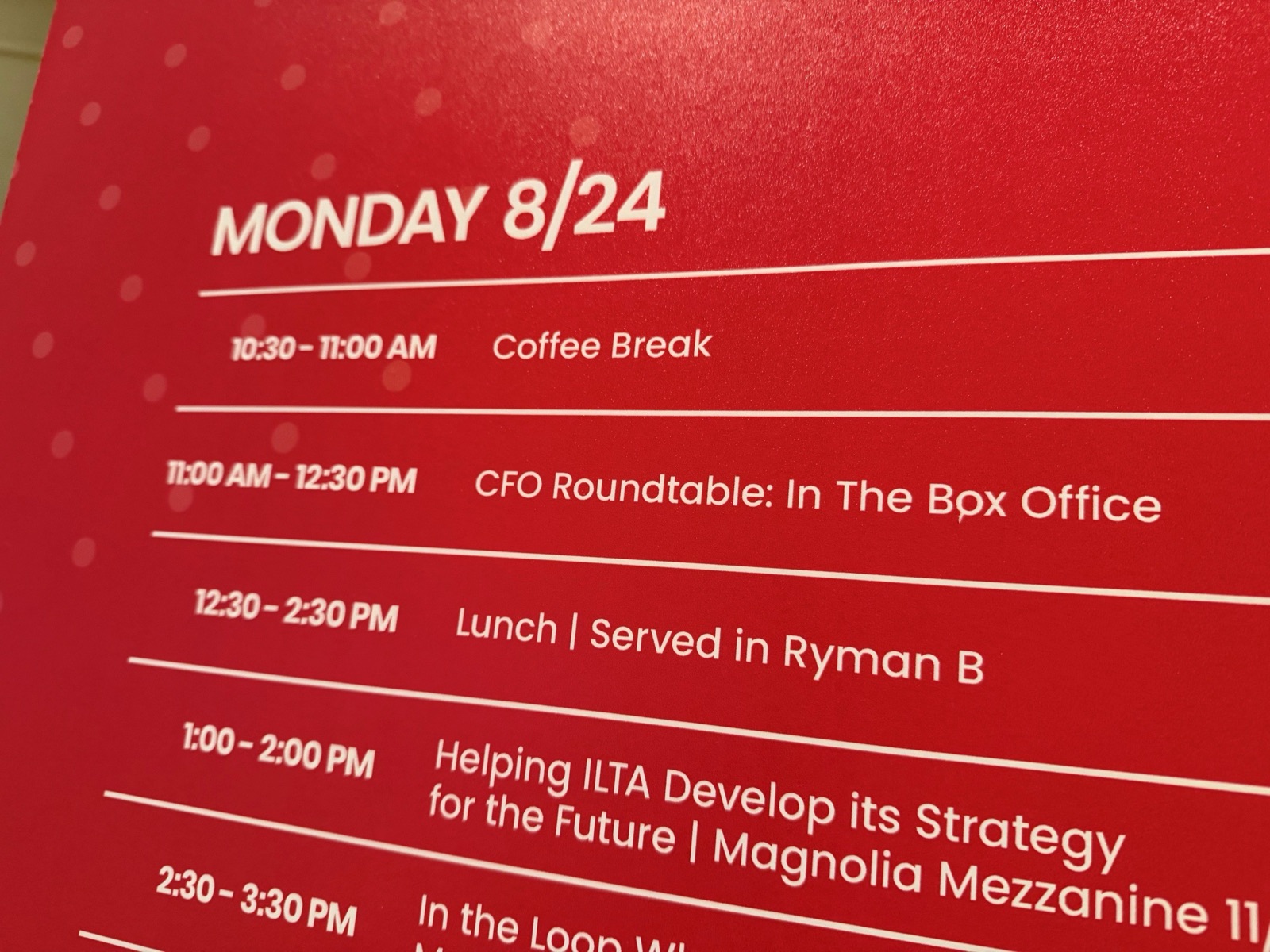
Most AI conversations in legal focus on practice-of-law use cases — drafting, research, review. The financial core of the firm gets far less attention, even though it's where AI decisions carry some of the sharpest consequences: billing and e-billing pipelines, pricing and profitability models, forecasting, collections, and the controls and audit trails wrapped around all of it.
That this conversation now has a place on the CFO track at ILTACON says something about where the industry is: finance leadership can no longer treat AI as someone else's decision. What follows is not a recap of the session — it's the standing guidance Cynaxus gives firms working through the same questions: where AI genuinely improves financial operations, where it introduces risk that finance leadership has to own, and how to evaluate vendor claims when every product in the stack now ships with an AI label.
The wrong way to do this is to bolt an AI feature onto your billing system because the vendor shipped one. The right way is to decide what the system of record should do, what AI should do around it, and where that line sits — then integrate deliberately. Firms that skip that step aren't adopting AI; they're accumulating risk.
Read access is not write access
When Cynaxus advises firms on AI-financial integrations, the design conversation starts with a simple distinction: what the AI is allowed to see versus what it is allowed to change. Reading financial data to summarize, reconcile, or flag anomalies carries one risk profile. Writing to the system of record carries another entirely.
The single most important design decision is whether AI gets read access or write access. Letting a model read financial data is one risk profile. Letting it write — post entries, touch bills, change client records — is another entirely. Firms should earn their way from read to write one workflow at a time, with a human approving every write until the evidence says otherwise.

The MCP security gap
Ficocello also points to the connection layer itself — the Model Context Protocol (MCP) and similar tool-calling standards that let AI assistants talk to line-of-business systems — as the area deserving far more scrutiny than it gets.
Everyone is talking about model quality, and almost no one is talking about MCP security. The moment you wire an AI assistant into your financial systems through MCP, you have created a new privileged integration surface — credentials, scopes, prompt injection, data exfiltration paths. That layer deserves the same scrutiny you would give any system-to-system integration with your general ledger, and right now it is not getting enough attention or discussion.
Guiding firms through what comes next

Sessions like this one reflect the position Cynaxus takes with every client: AI adoption in a law firm is an operational and governance decision, not a product purchase. The firms that navigate it well will be the ones whose financial and technology leadership build a shared view of the risks, the sequencing, and the evidence required before trusting AI with the numbers the firm runs on.
If your firm is working through the AI implications for its financial systems — or wants a second set of senior eyes on a decision already in motion — we'd welcome the conversation.